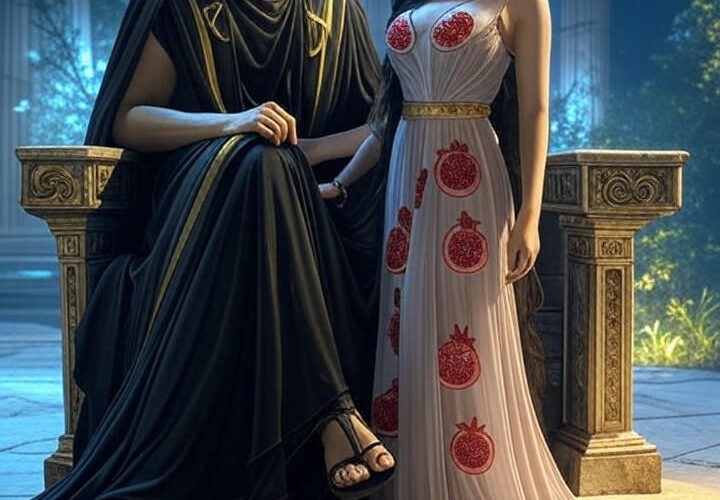
Osiris's Resurrection Ritual
In Egyptian mythology, Osiris was murdered and dismembered by his brother Set, but his wife Isis reassembled his body and resurrected him, symbolizing the cycle of life, death, and rebirth, which influenced ancient Egyptian beliefs in the afterlife.
Anubis: The Jackal-Headed God
Anubis, the god of mummification and the afterlife, was often depicted with a jackal's head because jackals were associated with cemeteries; he was believed to protect graves and guide souls to the underworld.
Pharaohs as Living Gods
Ancient Egyptian pharaohs were considered incarnations of the god Horus during their lifetime and became associated with Osiris after death, blurring the lines between divine and mortal rulers.
The Mystery of the Sphinx
The Great Sphinx of Giza, with the body of a lion and the head of a pharaoh (likely Khafre), is shrouded in mystery; some theories suggest hidden chambers beneath it containing ancient knowledge or artifacts.
Ra's Daily Journey
Ra, the sun god, was believed to travel through the underworld each night in a solar barge, battling the serpent Apophis to ensure the sun rose again, representing the eternal struggle between order and chaos.
The Book of the Dead
This ancient funerary text contained spells and incantations to guide the deceased through the afterlife; it was customized for individuals and often buried with them in tombs.
Cleopatra's Divine Lineage
Cleopatra VII, the last pharaoh of Egypt, claimed descent from the Ptolemaic dynasty, which traced its roots to Greek gods, but she also presented herself as the incarnation of the Egyptian goddess Isis to legitimize her rule.
The Curse of Tutankhamun
The discovery of King Tut's tomb in 1922 sparked rumors of a curse after several deaths among the excavators; while likely coincidental, it added to the mystique of ancient Egyptian pharaohs and their protected resting places.
Swipe or drag the card to navigate